

Developing lower-carbon surfaces for Canada
In development · Canada
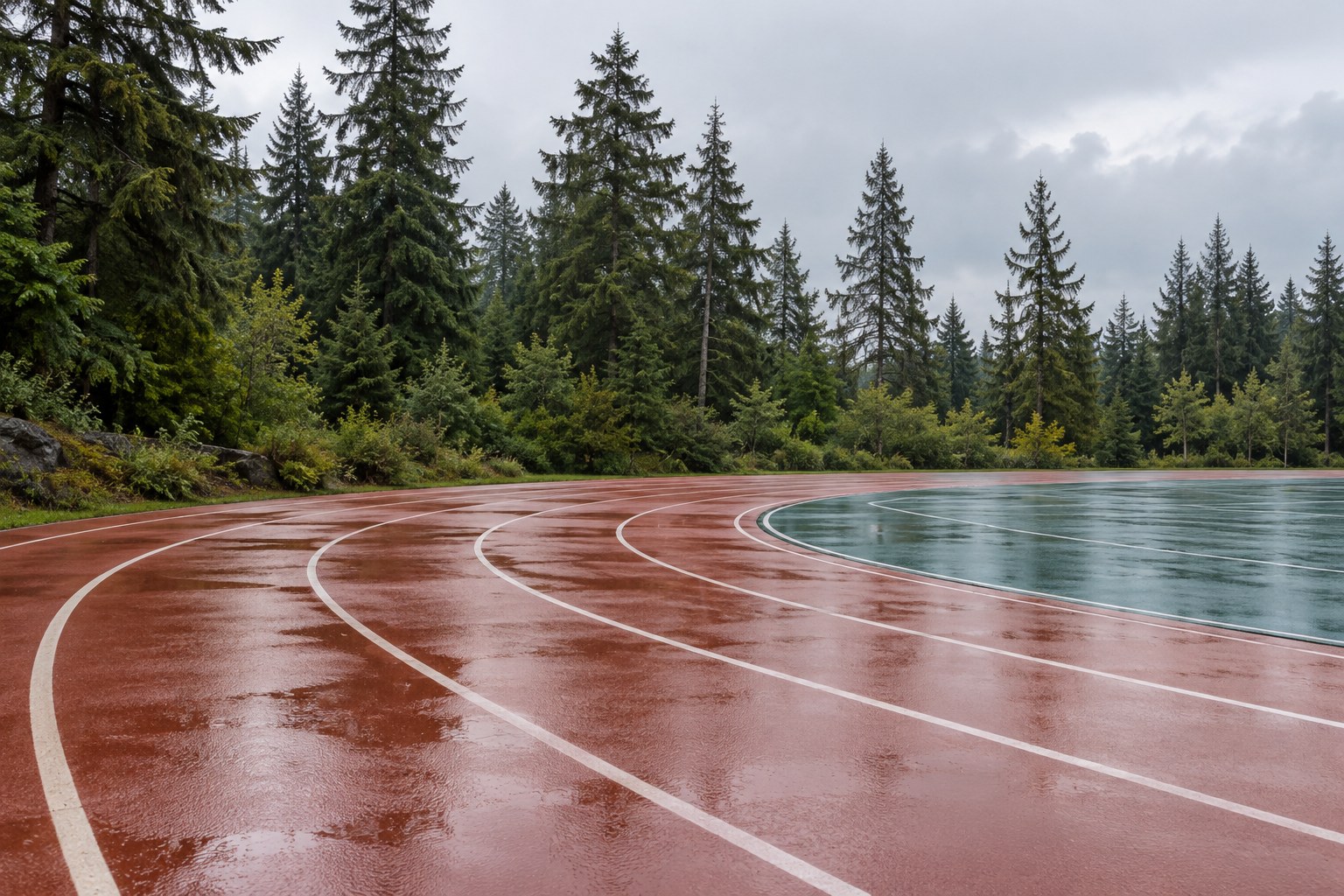
Targets
- 40wt%+
- recycled footwear rubber and EVA
- 35%+
- lower cradle-to-gate carbon than a virgin EPDM surface of the same performance
Carbon reduction will be verified by third-party life-cycle assessment.
Four priorities
- Know every material lotComposition and particle size, lot by lot.
- Match the binder to the materialBonding and durability under relevant conditions.
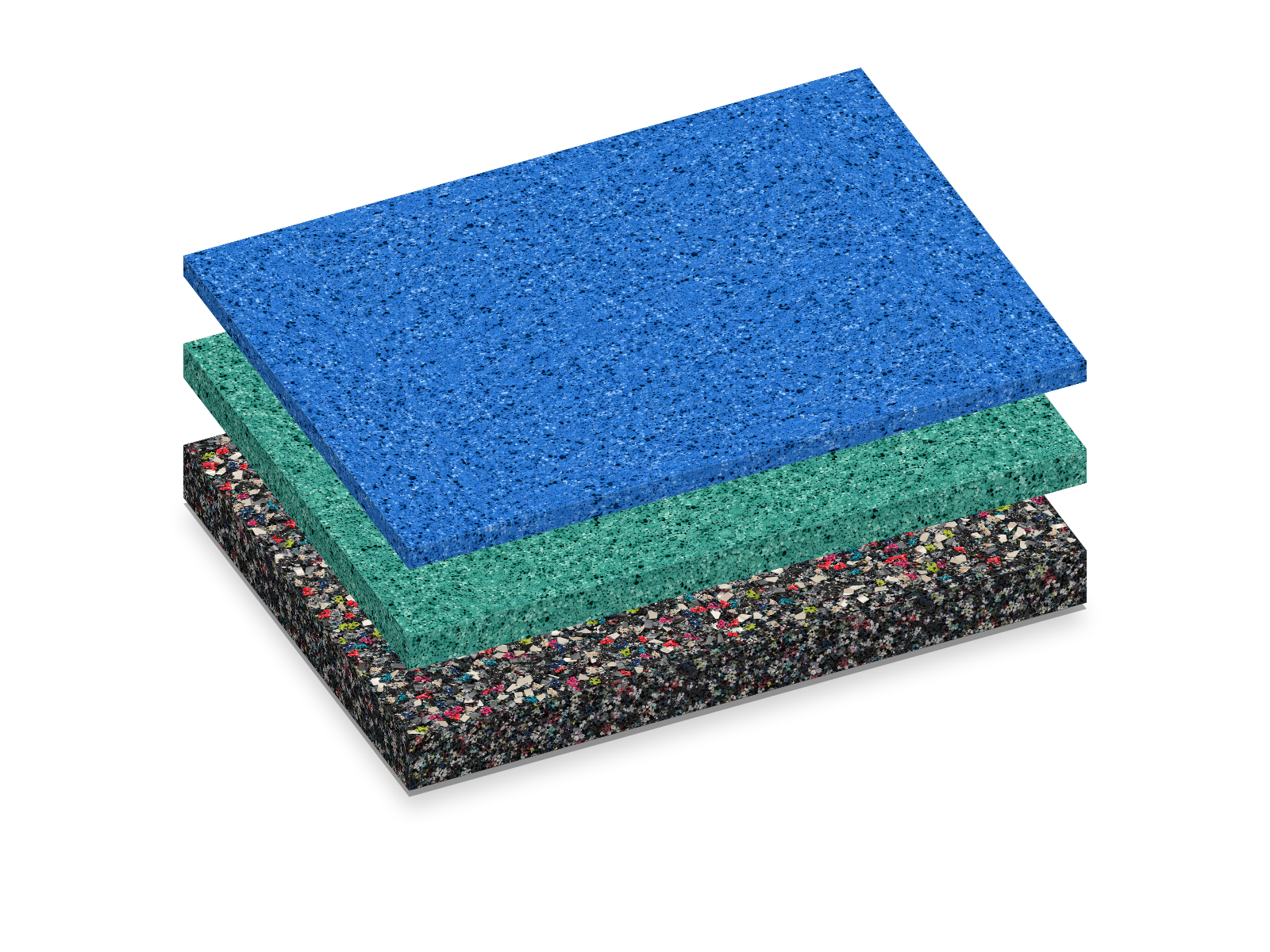
- Give each layer a jobElastic base, thermal middle, wear-resistant top.
- Record quality from lot to siteMaterial, formulation, installation and test.
What changes the result
- Feedstock lotsNo two lots are the same.
- FormulationBinder and input must match.
- InstallationSite conditions on the day.
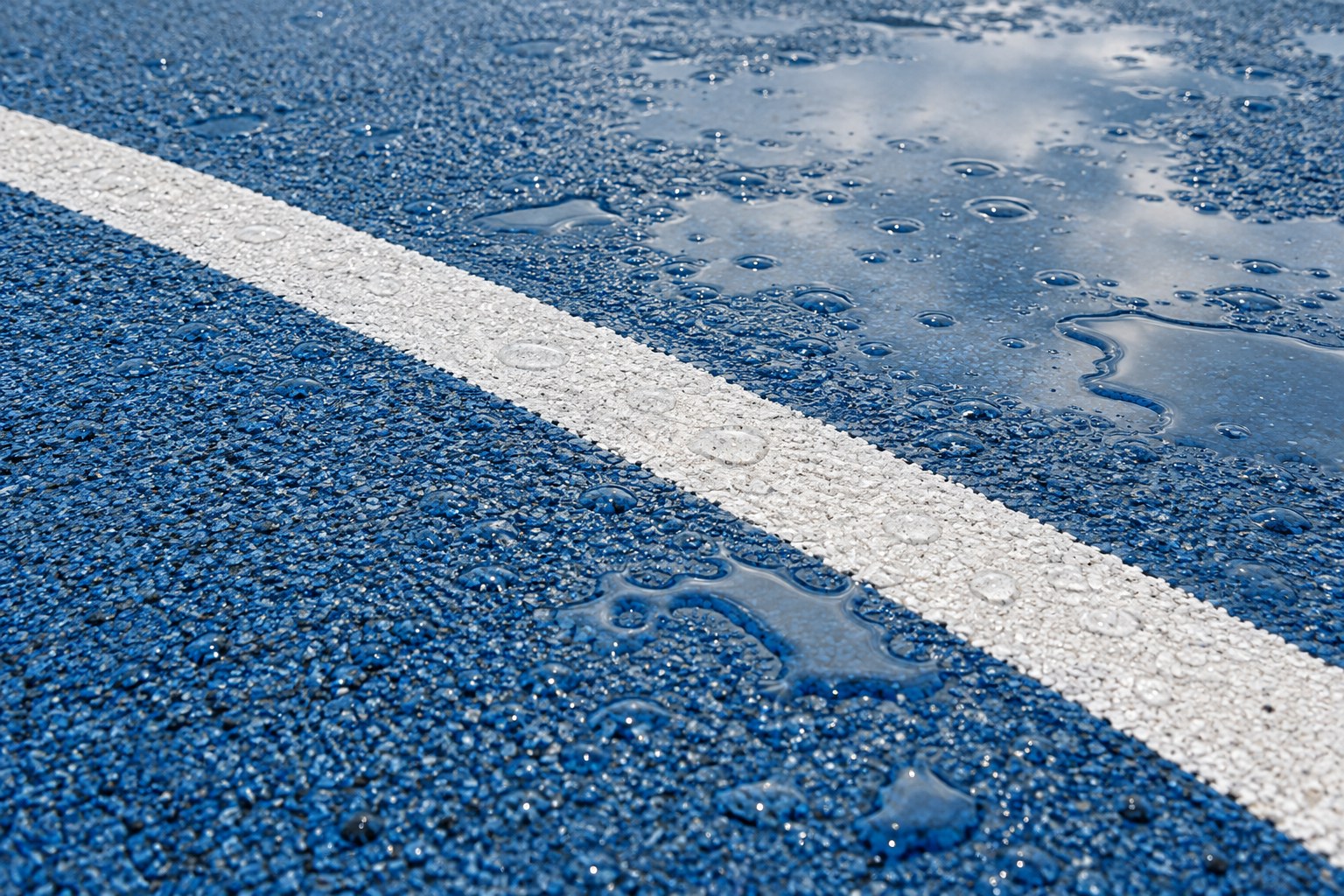
From lab to site
- CharacterizeDescribe each feedstock lot.
- CompareFormulations under defined conditions.
- Evaluate in the labSpecimens against relevant methods.
- PilotA limited area on a real site.
- Site feedbackFindings return to formulation.
Where we are
- In place · Korea
- Preparation of recovered rubber and EVA
- Formulation and installation in Korean projects
- Patents, ISO certificates and a KTR test report
- In development · Canada
- Lot-by-lot feedstock characterization
- Layered surfaces with a role for each layer
- Digital quality records
- Testing for Canadian climates
Researchers and test partners are welcome.